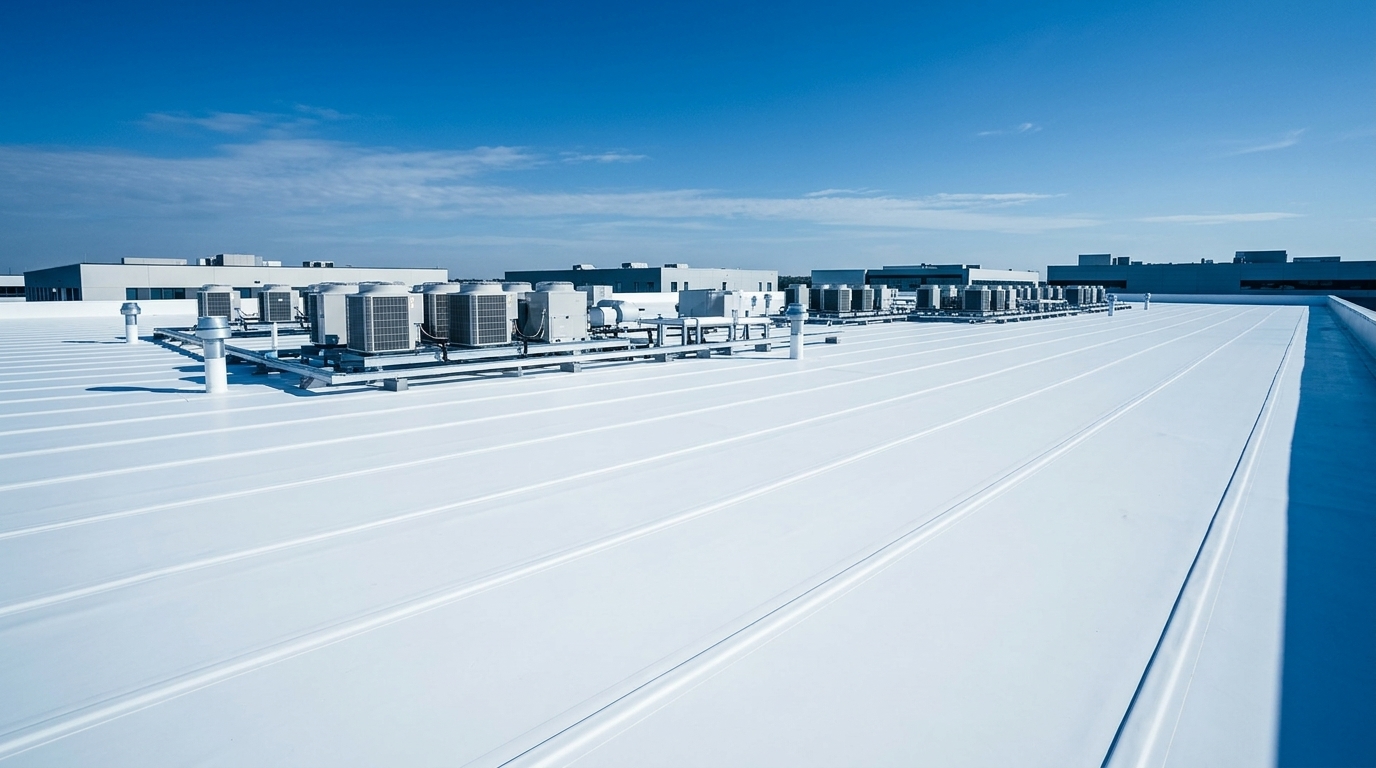
TPO roofing in St Louis Park is vulnerable to summer heat and storm stress. Learn where leaks start and how to catch them early.
Summer in St Louis Park does something specific to commercial flat roofs that doesn't get enough attention: it subjects TPO membrane systems to their most demanding combination of thermal stress, rooftop foot traffic, and storm runoff all at once. TPO roofing in St Louis Park fails most often not because the material is poor quality, but because the conditions between June and August expose every installation or maintenance shortcut that was present but not yet consequential. By the time a seam opens or a penetration seal fails enough to leak, the contributing conditions have usually been building for a full season.
The Short Answer: Where Do Summer TPO Leaks Actually Start?
TPO roofing in St Louis Park most commonly develops summer leaks at four specific locations: heat-stressed seam welds that have partially separated, penetration seals around HVAC curbs and pipe boots that have cracked under thermal cycling, punctures from rooftop maintenance foot traffic near mechanical equipment, and drain areas where standing water has been in prolonged contact with the membrane. None of these fail suddenly. Each one progresses through a recognizable set of stages that a trained inspection can catch before they produce an interior water event.
What Property Owners Usually Notice First
Commercial property owners in St Louis Park dealing with a TPO roofing issue rarely see it coming from the roof surface first. The sequence almost always starts inside the building: a ceiling tile that looks slightly discolored, an interior light fixture that starts flickering after a rainstorm, or a tenant in a top-floor unit reporting a musty smell that wasn't there last season.
Other early indicators that often get attributed to other causes:
- Roof membrane that has developed a visible ripple or bubble in a section that was previously flat, often near an HVAC unit or parapet wall
- White efflorescence or mineral streaking on interior wall surfaces near rooftop penetrations, indicating water has been running down through a wall cavity
- HVAC performance changes in units directly below a rooftop mechanical system, sometimes caused by moisture affecting ductwork rather than the unit itself
- Unexplained increases in heating or cooling cost tied to compromised insulation from moisture infiltration in the roof assembly
What property owners often miss is that TPO roofing in St Louis Park commercial buildings can be losing water through a failed seam or penetration for weeks before that water reaches a surface where it's visible. The membrane assembly, insulation board, and deck layers all absorb and redirect moisture before it shows up on a ceiling tile.
What a Roofing Contractor Looks For on a TPO Summer Inspection
On many commercial roof inspections in St Louis Park, we find that the visible leak location inside a building and the actual membrane failure point are separated by significant distance. Water entering through a failed HVAC curb flashing on the west side of a roof can travel across the insulation layer and appear as a ceiling stain on the east side of the building below.
Here is what a thorough TPO roofing inspection in St Louis Park actually involves:
Seam weld integrity testing. TPO seams are heat-welded, and the quality of that weld determines long-term performance more than almost any other installation variable. We probe seams with a tool that tests whether the weld has achieved a proper bond through the full width of the overlap, not just the surface layer. A seam that feels bonded visually but hasn't fully welded through will fail under thermal stress or sustained water exposure.
Thermal cycling crack assessment. St Louis Park commercial rooftops can experience surface temperatures exceeding 170°F on a dark-colored TPO membrane during peak summer sun, followed by significant temperature drops after storms or overnight. This cycling expands and contracts the membrane repeatedly, and penetration seals made from different materials than the TPO field membrane experience this stress differently. We check every penetration collar for cracking, separation, and any sign of lifting at the membrane interface.
Rooftop traffic damage mapping. HVAC technicians, electricians, and other trade contractors access commercial rooftops throughout the summer, often without roofing-specific training about where it's safe to step on a TPO surface and where it isn't. We look for punctures, scuff damage near equipment, and areas where protective walk pads are absent but foot traffic is obvious from marks on the membrane surface.
Drain and scupper condition. TPO roofing in St Louis Park sits over buildings that range from modern construction with engineered drain layouts to older structures where the drainage configuration has been modified multiple times. We check every drain for debris accumulation, confirm the drain ring and membrane termination are properly sealed, and identify any areas where water is pooling rather than flowing to a drain.
Parapet wall flashing termination. TPO membrane terminates at parapet walls with a termination bar and sealant detail that requires periodic maintenance. Failed parapet terminations allow water to work behind the membrane at the edge, which can cause progressive detachment of the membrane from the insulation below and eventual widespread water infiltration.
A roofer inspecting TPO roofing in St Louis Park is reading a system, not just scanning a surface. The seams, penetrations, drains, and terminations all function as a connected waterproofing layer, and a weakness in any one of them affects the whole.
Common Mistakes Commercial Property Owners Make With TPO Systems
Scheduling rooftop maintenance without considering membrane impact. Every trade that accesses a commercial rooftop in St Louis Park needs to understand where it's appropriate to step and where protective measures are required. We regularly find puncture damage clustered near HVAC equipment, directly correlated with service visits that didn't use walk pads or weren't aware of penetration-sensitive membrane areas nearby.
Treating surface discoloration as cosmetic. TPO membrane that has turned from white to gray or brown in certain areas isn't just dirty. Discoloration often indicates biological growth, sustained moisture contact, or oil contamination from HVAC exhaust, all of which can degrade the membrane's UV resistance and seam performance over time.
Skipping annual seam inspections because there's no visible leak. TPO seam failures develop gradually. A seam weld that is 80 percent intact but has 20 percent separation along one edge won't leak during light rain, but it will allow water infiltration during a sustained storm event or when thermal expansion pushes water into the gap. Annual seam probing catches these partial failures before they become complete ones.
Assuming TPO roofing in St Louis Park is maintenance-free because it's newer. TPO systems are durable when properly maintained, but they are not set-and-forget installations. The thermal cycling of a Minnesota climate, combined with rooftop equipment access and summer storm activity, means TPO roofing in St Louis Park requires scheduled inspection and maintenance to achieve its rated service life.
A St Louis Park Property Manager's Summer Leak Experience
A property manager at a multi-tenant professional building near the Highway 100 corridor contacted us in August after a tenant on the second floor reported a ceiling stain that had appeared following two consecutive weeks of afternoon thunderstorms. The building's TPO roof had been installed seven years earlier and had no documented history of leaks.
We found the failure at an HVAC curb on the northwest corner of the roof, where the original curb flashing detail had used a non-TPO compatible sealant that had cracked and separated over several seasons of thermal cycling. The curb itself was physically sound, but the interface between the curb flashing and the field membrane had opened enough to allow water entry during sustained wind-driven rain, which explained why light storms hadn't produced interior symptoms but the heavier July events had.
The repair involved removing the failed sealant, cleaning the membrane interface, and installing a proper TPO-welded curb cap over the existing flashing. It was a contained repair completed in a single visit. If the same curb seal had been allowed to continue deteriorating through another Minnesota winter, the freeze-thaw cycling would almost certainly have progressed the separation to the point where a more significant repair or full curb replacement would have been necessary.
Why St Louis Park's Commercial Building Mix Makes This Topic Particularly Relevant
St Louis Park has one of the more diverse commercial building inventories in the western Twin Cities metro, ranging from postwar light industrial buildings near the railroad corridor to modern mixed-use and office developments near the Wooddale and West End areas. This range of building ages and types means TPO roofing in St Louis Park exists across a wide spectrum of installation vintages, from early TPO systems installed in the 1990s when the material was relatively new, to recent high-performance installations on current commercial projects.
According to NOAA summer precipitation data, the Twin Cities metro sees its highest rainfall concentration between June and August, with July typically producing the most intense single-event totals. For TPO roofing in St Louis Park, this means the material's weakest points face their most significant water pressure during the same window when thermal stress from summer heat is also at its peak.
Request a TPO Roof Inspection Before Small Summer Leaks Spread
If your St Louis Park commercial building has a TPO membrane roof and hasn't had a systematic seam, penetration, and drain inspection this season, the window to catch developing issues before fall's sustained rain and winter's freeze-thaw cycling add to the stress. Altus Construction specializes in TPO roofing inspections and repairs across the Twin Cities metro, with the field experience to distinguish a surface maintenance need from a failing seam that requires immediate attention. Request your TPO roof inspection today and get ahead of a small summer leak before it becomes a winter-weather problem.
Visit us in St Louis Park, MN, we're based locally and inspect commercial TPO roofing across the metro area.
Frequently Asked Questions
How long should a TPO roof last on a St Louis Park commercial building?
A properly installed and maintained TPO system typically carries a 20 to 30-year service life under manufacturer warranty terms, though real-world performance varies significantly based on installation quality, maintenance history, rooftop traffic, and local climate stress. TPO roofing in St Louis Park that receives annual seam inspections, prompt penetration seal maintenance, and appropriate rooftop traffic protocols consistently outperforms systems that receive only reactive maintenance after leaks develop. The Minnesota climate's thermal cycling is one of the more demanding environments for any commercial membrane, which makes the maintenance schedule more important here than in milder climates.
What causes TPO seams to fail on commercial roofs in St Louis Park?
The most common causes are insufficient weld width during installation, contamination of the membrane surface before welding, and thermal stress over time on welds that were marginal from the start. TPO roofing in St Louis Park faces temperature swings between summer highs above 170°F on the membrane surface and winter lows well below zero, and that range tests every seam's bond integrity repeatedly across each annual cycle. Seams that were properly welded to full specification hold through this cycling. Welds that were rushed or contaminated begin to show partial separation within several seasons.
Is TPO or EPDM a better choice for a St Louis Park commercial building?
The answer depends on the building's specific drainage profile, rooftop equipment load, and energy performance priorities. TPO roofing in St Louis Park is generally preferred where energy efficiency is a significant consideration, since white TPO reflects significantly more solar heat than black EPDM. EPDM offers different performance characteristics in extremely cold temperatures and has a longer documented track record in Minnesota's climate. We assess both options relative to each specific building rather than giving a blanket recommendation.
How do I know if a TPO roof stain is a maintenance issue or a seam failure?
Surface staining alone doesn't distinguish between the two. A seam failure that has allowed water infiltration over time can produce staining that looks similar to surface-level soiling, biological growth, or HVAC exhaust residue. The only reliable way to determine whether a stained or discolored area on a TPO roof indicates a seam or membrane integrity issue is to probe the area and the surrounding seams physically during a professional inspection. Surface appearance alone is not a reliable diagnostic.
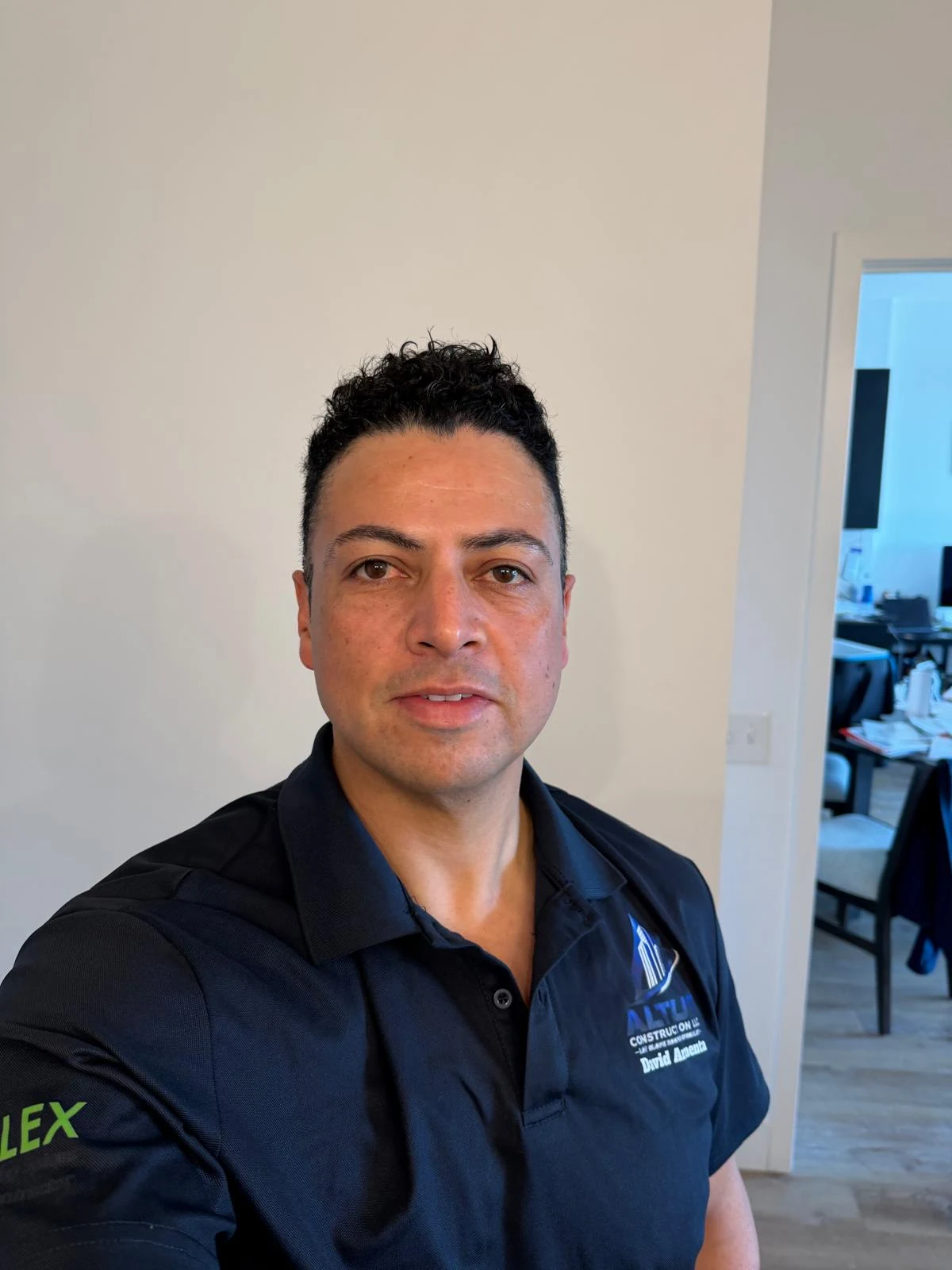
David Armenta Magana, Owner.