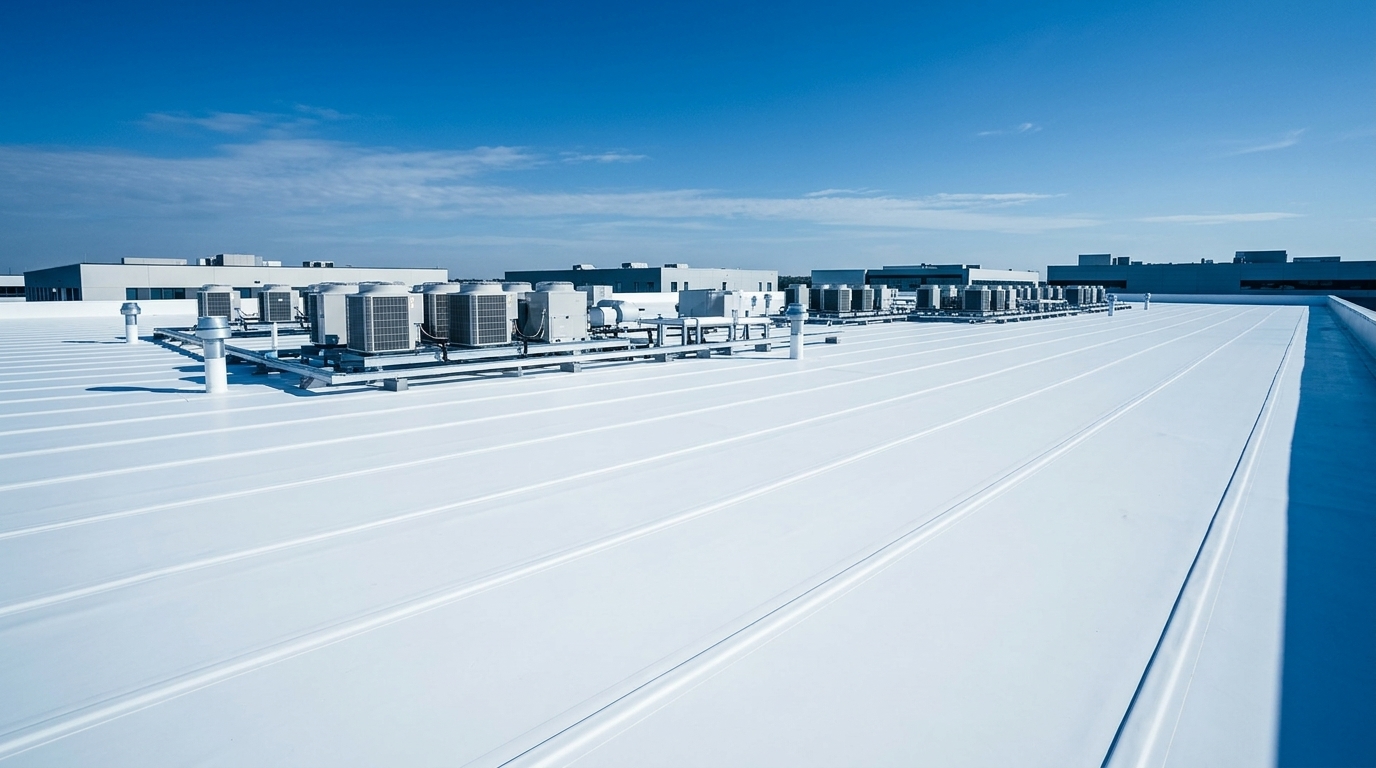
Flat roof ponding water in Minneapolis signals drainage problems. Learn when it's serious and what a contractor checks before it leaks.
Flat roof ponding water in Minneapolis is one of the most common concerns we hear from commercial property owners after a summer storm, and the honest answer is that some ponding is expected, but persistent ponding is a different problem entirely. Minneapolis flat roofs face a specific combination of July storm intensity and aging drainage infrastructure that makes this issue more consequential than it looks from the ground. In our experience inspecting low-slope commercial roofs across the metro, ponding that it isn't clear within 48 hours is almost always telling you something worth investigating.
The Short Answer: When Does Ponding Water Become a Problem?
Flat roof ponding water in Minneapolis becomes a problem when it sits longer than 48 hours after a rain event. Standing water accelerates membrane degradation at the contact point, adds structural load to the roof deck, and creates the exact conditions where seam failures and drain blockages compound each other. On older low-slope buildings common throughout Minneapolis, even modest ponding concentrated in the same spot season after season can shorten membrane life by years. If water is sitting on your roof three days after the last rain, something in your drainage system needs attention.
What Property Owners Usually Notice First
Most Minneapolis commercial property owners don't discover ponding issues by walking on their roof. They find out from a tenant reporting a ceiling stain, a facilities manager noticing a soft patch in ceiling tiles near an HVAC unit, or a contractor pointing it out during an unrelated service visit.
Signs that often surface before an obvious interior leak:
- Roof membrane that shows a visible depression or dish shape in certain areas, visible from an adjacent rooftop or upper floor window
- Drain covers that are consistently surrounded by debris and sediment after every rain
- Watermarks or white mineral deposits on parapet walls at low points, indicating repeated water contact at the same elevation
- Interior ceiling tiles with a subtle yellowish ring that doesn't connect to any known plumbing line above
What property owners often miss is that flat roof ponding water in Minneapolis doesn't require a dramatic storm to become a problem. Slow, steady summer rains that accumulate over several hours can leave more standing water than a brief intense downpour, simply because the drainage system never gets overwhelmed in a single burst but never fully clears either.
What a Roofing Contractor Looks For During a Ponding Assessment
On many flat roof inspections across Minneapolis, we find that the visible ponding area and the actual source of the drainage problem are not in the same location. Water finds the lowest point on the membrane, but the cause is often a partially blocked drain on the other side of the roof, a sagged deck section from prior moisture damage, or a scupper that has been painted or caulked shut during a past renovation.
Here is what Altus evaluates during a thorough flat roof ponding inspection in Minneapolis:
Drain flow testing. We physically test each drain by pouring water and observing actual flow rate, not just checking whether the drain cover is clear. Partial blockages from sediment, roofing gravel, or biological growth can slow drainage significantly without appearing obstructed during a visual check.
Roof slope and deck condition. Flat roofs are never truly flat. They're designed with a slight slope, typically a quarter inch per foot, to move water toward drains. When decking sags from moisture damage or structural deflection, that designed slope reverses in certain areas, creating low points that collect water regardless of drain condition.
Membrane condition at ponding zones. We assess the membrane surface in every identified ponding area for blistering, soft spots, and surface erosion. Flat roof ponding water in Minneapolis that has been sitting repeatedly in the same location leaves a visible record on the membrane surface, and that record tells us how long the problem has been developing.
Seam integrity near low points. Water concentrates at seams under ponding conditions in a way it doesn't during normal rainfall. We pay particular attention to membrane seams within and immediately surrounding ponding zones, since these are the most likely first failure points under sustained water contact.
Parapet wall and scupper condition. On Minneapolis commercial buildings with parapet walls, scuppers are the primary overflow drainage path when primary drains are insufficient. Blocked or deteriorated scuppers turn a drainage slowdown into a backup that can hold significant water volume against the interior face of the parapet.
A roofer assessing flat roof ponding water in Minneapolis treats the drainage system as a whole, not as individual components. A clear drain on a sagged deck still produces ponding. A good membrane over a blocked scupper still holds water against the parapet wall.
Common Mistakes Commercial Property Owners Make
Clearing the drain and considering the job done. Removing debris from a drain cover addresses one possible cause of ponding, but it doesn't evaluate whether the drain body itself is clear, whether the deck slope is functioning as designed, or whether seams near the low point have already begun to fail. We regularly inspect roofs where drain cleaning was the only maintenance performed, and persistent ponding continued because the actual cause was a sagged deck section six feet from the drain.
Treating surface patching as a ponding solution. Applying membrane patch material over a blistered or degraded spot in a ponding zone without addressing the drainage issue means the patch sits underwater repeatedly and fails faster than the surrounding membrane. The surface symptom and the drainage cause have to be addressed together.
Waiting for an interior leak before acting. By the time flat roof ponding water in Minneapolis produces a ceiling stain inside the building, the membrane at the ponding zone has typically already failed and water has been tracking across the deck for some time. Acting before the interior symptom appears is almost always significantly less expensive than acting after.
Assuming summer ponding isn't relevant to winter performance. Ponding zones that develop during summer become the most vulnerable points on the roof as freeze-thaw cycling begins in fall. Water trapped in a seam or membrane blister freezes, expands, and widens the gap, turning a marginal drainage issue into an active winter leak.
A Minneapolis Property Manager's Experience
A property manager overseeing a multi-tenant commercial building near the North Loop contacted us after a tenant on the top floor reported a ceiling stain following consecutive July storms. The roof had been inspected the previous spring and received a clean report, so the manager was skeptical that a significant problem had developed that quickly.
When we got on the roof, we found a section of persistent ponding on the west face that was clearly not new. The membrane in that area showed UV and moisture degradation consistent with repeated, prolonged water contact over multiple seasons. The drain nearest to the low point was clear, but the roof deck in that zone had sagged enough to reverse the designed slope, something that wouldn't have been caught by a visual inspection from the drain level alone.
The ceiling stain wasn't from the summer storms directly. It was from a seam in the ponding zone that had finally failed after seasons of sitting underwater. Flat roof ponding water in Minneapolis rarely announces its damage immediately. It builds slowly until it doesn't.
Why Minneapolis Summer Storms Create Specific Flat Roof Risk
Minneapolis sees a meaningful concentration of heavy convective rainfall between June and August, with July typically being the most active month for high-intensity, short-duration storm events. According to NOAA precipitation data, the Twin Cities metro regularly records one-hour rainfall totals that challenge the design drainage capacity of older flat roof systems, particularly those with drain configurations sized to older building code standards.
Minneapolis also has a significant inventory of commercial buildings constructed between the 1960s and 1990s, many with original or once-replaced membrane systems that are approaching or past their expected service life. Flat roof ponding water in Minneapolis on these older buildings isn't just a drainage problem. It's a drainage problem on a membrane that has less tolerance for the stress that ponding creates.
The combination of aging building stock, intense summer rainfall, and drainage systems that haven't been maintained to account for either factor is what makes flat roof ponding in Minneapolis a genuinely consequential maintenance issue rather than a cosmetic one.
Schedule a Commercial Flat Roof Inspection Before Ponding Turns Into a Leak
If your Minneapolis commercial property has areas of persistent standing water after summer storms, the drainage system and membrane condition in those zones need a professional assessment before fall precipitation and freeze-thaw cycling add to the problem. Altus Construction provides detailed flat roof ponding inspections that go beyond drain clearing to evaluate deck slope, seam integrity, and membrane condition at every low point. Schedule a commercial flat roofing inspection and get a clear picture of what your drainage system is actually doing before the next storm tests it further.
Visit us in St. Louis Park, MN and let a local team with real flat roof experience assess your building before ponding becomes a much more expensive problem.
Frequently Asked Questions
How long is too long for flat roof ponding water in Minneapolis to sit after a storm?
The general industry standard is 48 hours. Water that clears within two days of a rain event is generally within acceptable drainage performance for a flat or low-slope roof. Flat roof ponding water in Minneapolis that persists beyond 48 hours consistently indicates either a drainage obstruction, a deck slope issue, or a membrane depression that has developed from prior moisture damage. Any of these need professional evaluation, not just a drain cleaning.
Can flat roof ponding water cause structural damage to a Minneapolis commercial building?
Yes, over time. Water weighs approximately 5.2 pounds per square foot per inch of depth. A modest ponding area holding two inches of standing water across a 20-by-20-foot section adds over 4,000 pounds of undesigned load to the roof deck. On older Minneapolis commercial buildings where the deck may already have some deflection from age or prior moisture exposure, this recurring load contributes to further sagging, which worsens the ponding cycle with each subsequent rain event.
Is flat roof ponding always caused by a blocked drain?
Not always, and this is one of the most common misunderstandings we encounter. Blocked drains are one cause, but persistent flat roof ponding water in Minneapolis is just as often caused by deck deflection that has reversed the designed slope, membrane depressions from prior repair work, or improperly configured drainage layouts on roofs that have been modified during renovations. Clearing the drain is a starting point, not a complete solution, without evaluating what's causing the water to concentrate in that location.
How does summer ponding affect a Minneapolis flat roof heading into winter?
Significantly. Any water that has worked its way into a seam, blister, or membrane gap during summer ponding is still there when temperatures drop. That moisture freezes, expands, and widens the entry point, which allows more water in during the next thaw cycle. Flat roof ponding water in Minneapolis that seems manageable during summer can accelerate to an active winter leak through repeated freeze-thaw cycling on what was originally a small membrane compromise.

David Armenta Magana, Owner.